Anyone Can Do It! How to Create a Landing Page That Sells Like Hotcakes

14 MIN READ
I've given it a ridiculously simple title, but it's an important topic. Anyone can do it! How to create a best-selling landing page. Some of you might find it suspicious. You might think, 'If anyone could create an LP (landing page) that sells to everyone, they wouldn't struggle so much.'
However, if the world of landing pages were truly 'only for special people to sell,' then this sales method wouldn't be so widespread. If you grasp the knack, it sells. That's why the landing page method exists.
Rather, a landing page that sells needs to be systematized simply as a team, not personalized to someone with special abilities, so that anyone can create it. That's why a method that anyone can do, while it might seem suspicious, is actually quite important.
When selling products or services, a landing page is essential. However, not many people can 'suddenly' create a landing page that sells. First, consider it a considerable miracle if any professional gets results from the very first attempt.
A very small number of highly skilled individuals or organizations might get results from the first attempt, but they are few, and it could be said they just happened to sell. Personalization to highly skilled individuals should be avoided as much as possible.
What's particularly important is 'design.' While design and construction can be entrusted to specific individuals, the content itself requires a system that anyone within the company can handle.
A landing page isn't something you make just one of; you make many. For each product, each service, each campaign, each job opening. There's a lot of demand. It's not about making one perfect landing page; you have to make many.
Therefore, rather than personalizing it to a select few, creating 'a system itself that enables anyone to create a landing page that sells repeatedly' can lead to long-term sales.
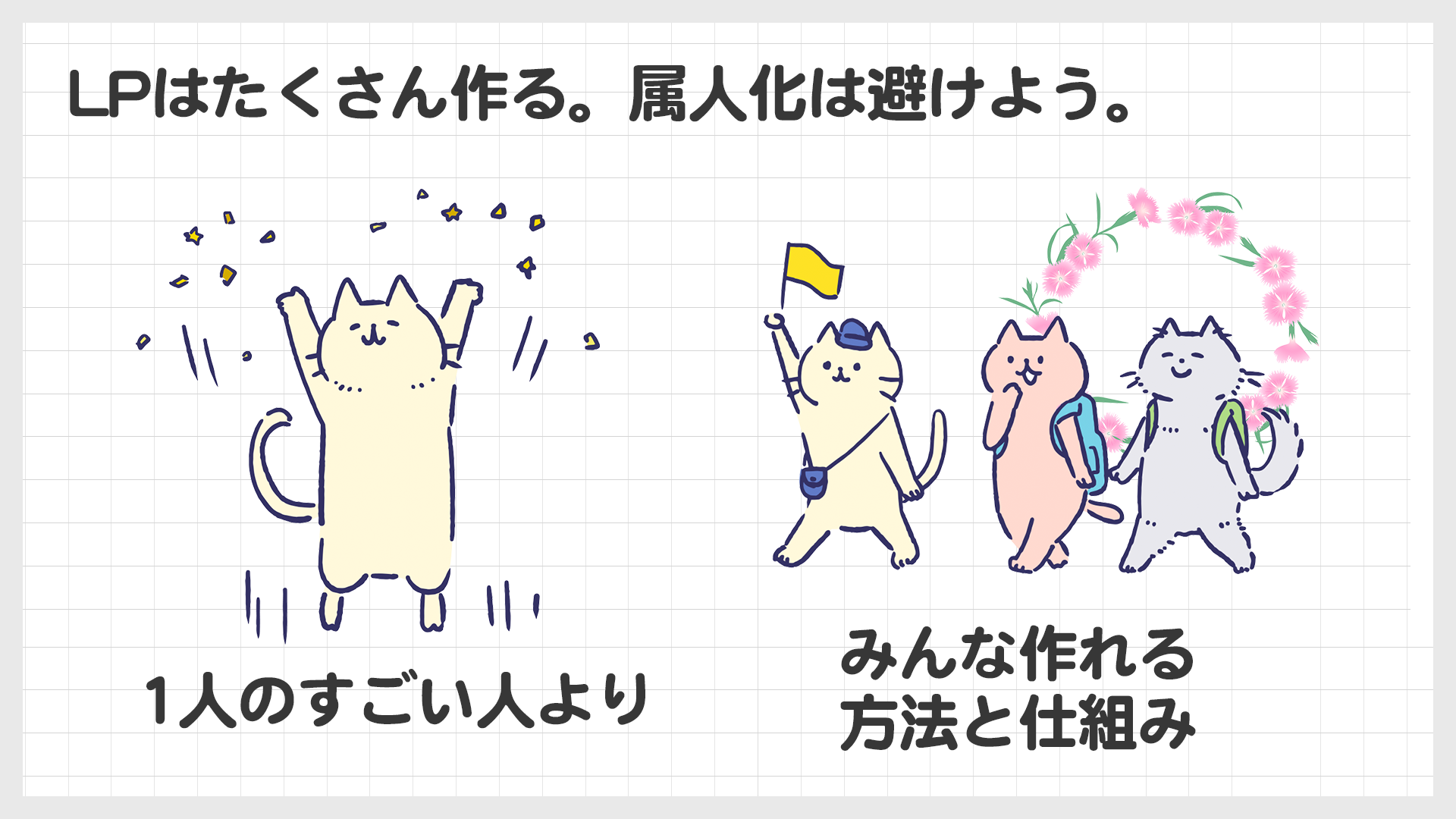
That's why we believe it's better to convey our know-how to our clients themselves and their in-house web staff, so they can create things on their own. Naturally, having design know-how within the company allows for continuous, long-term sales.
Therefore, let's consider this landing page creation method as 'creating a system for anyone to build a landing page that sells.' By being mindful of the flow and elements introduced today, you will likely be able to create landing pages that yield results with high probability. However, patience and stamina are definitely required.
Basic Flow for Creating a Best-Selling Landing Page
If you research web marketing and sales methods, you'll likely find many difficult theories. 'Something' psychology, 'something' analysis, and so on; there's a lot if you just look at the methods. But realistically, can't you create a landing page that sells without using such difficult theories?
There are also many tools like heatmaps and access analytics. Setting aside basic configurations and knowledge, do you really need to use such difficult tools to sell with a landing page? Actually, that's not the case. With diligence and patience, anyone can create one.
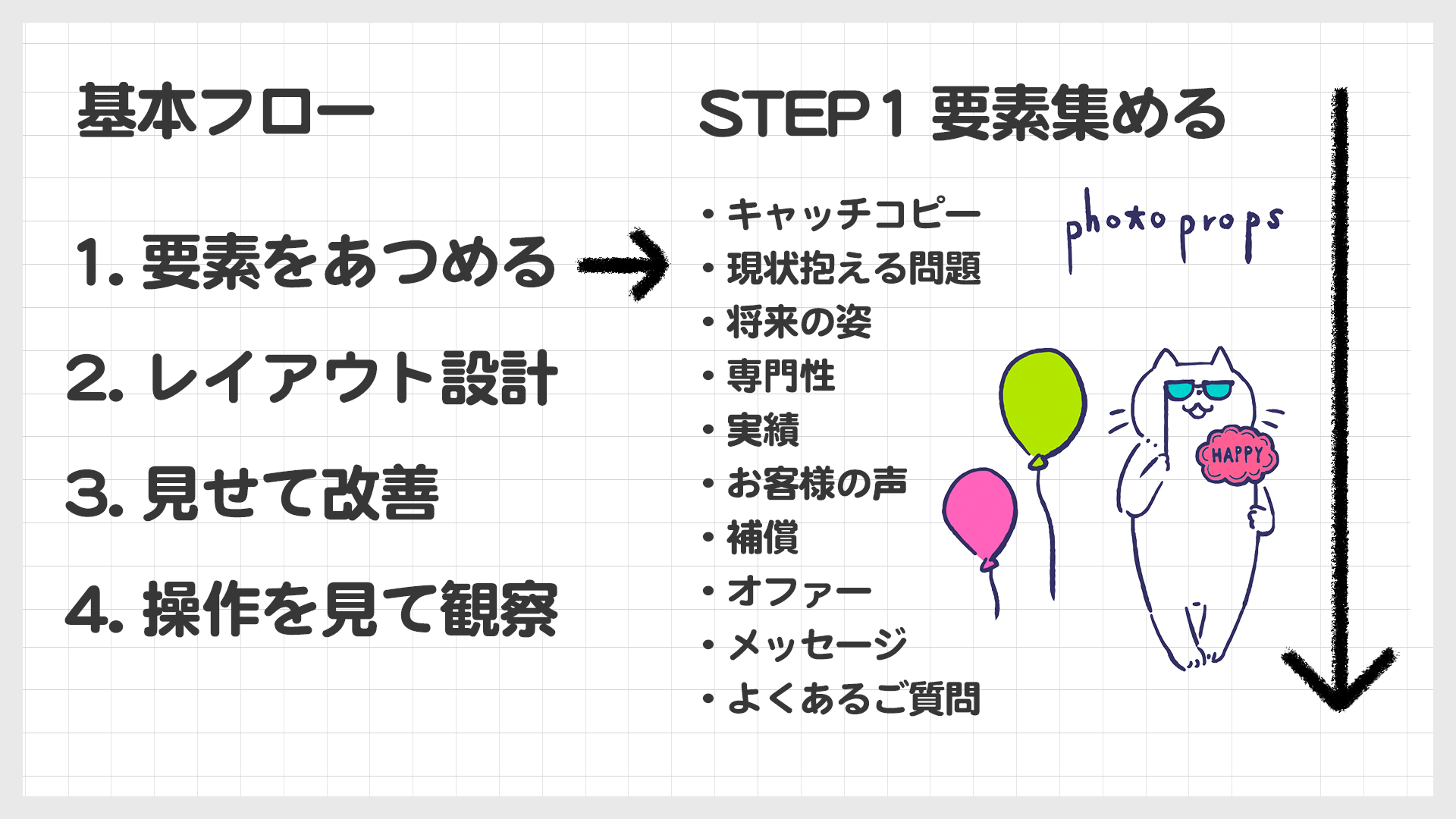
Gather Elements
There are only three simple steps in the flow.
First, gather all the content for the following elements.
- Catchphrase
- Current Problems
- Future Vision
- Expertise
- Achievements
- Customer Testimonials
- Guarantee
- Offer
- Message
- Frequently Asked Questions
We will explain the detailed content of each item one by one later. For now, please gather all the information listed above without omission. 80% of whether a landing page will sell or not is determined at the stage of planning, text, and the quality of the product itself. If you have good content, your products or services will sell even if you distribute them as PDFs instead of making them into a website.
Consider the Layout
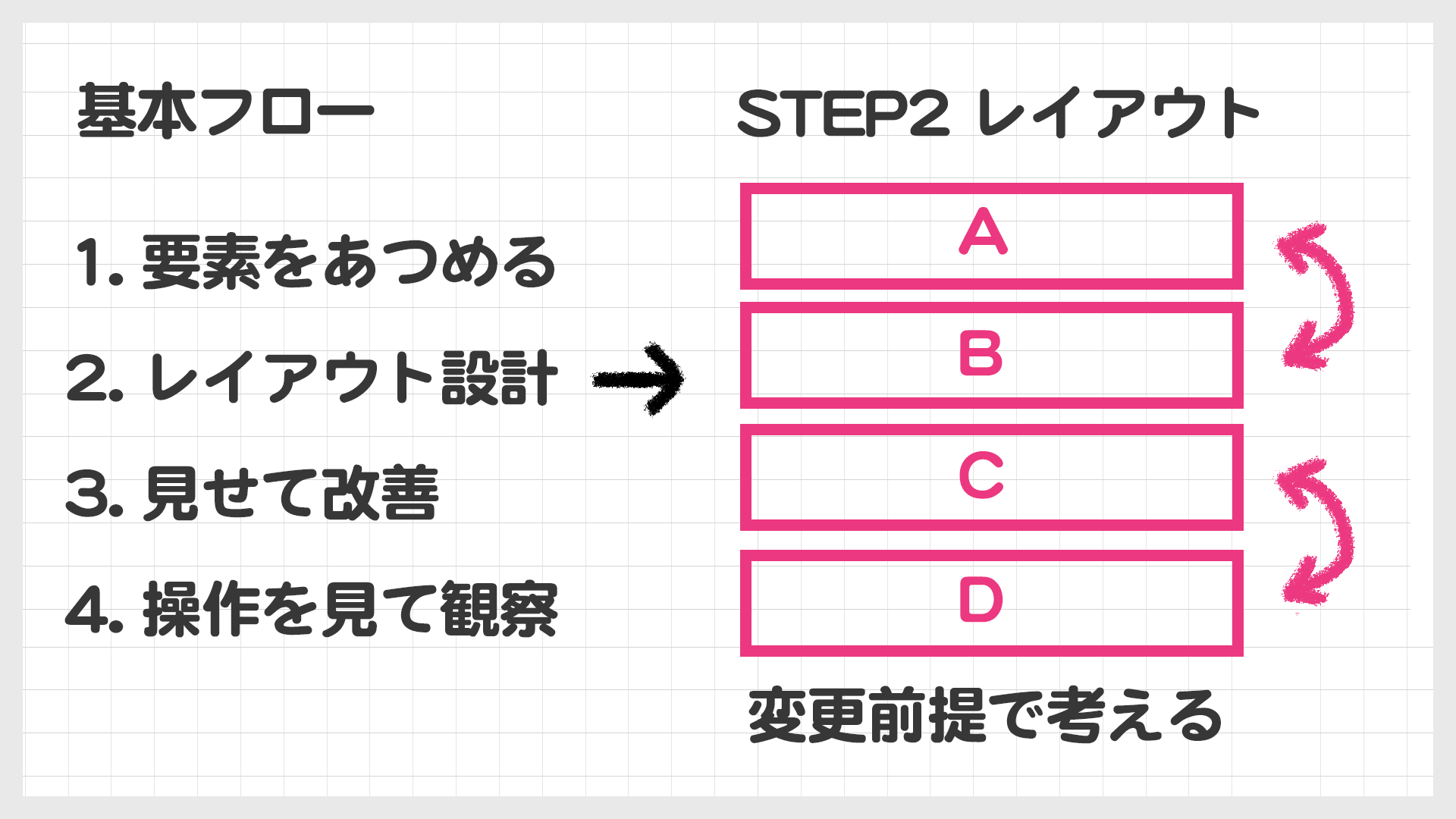
Once you have all the content, for now, think about the landing page layout in the order of the list presented earlier. The content itself may change positions. Therefore, you should not proceed with everything fixed from the beginning. You need to create it with the assumption that it can be changed at any time.
The reason is that by showing it to actual users and changing the order of content based on their reactions, it can sometimes lead to better results.
For example, in the current flow, what comes after the catchphrase is 'Current Problems'. Problems are the users' concerns themselves, such as 'I have this kind of worry'. The purpose is to make users who visit the landing page think, 'Ah, this applies to me too,' and make it 'their own matter'.
However, when actually tried, there are cases where placing 'Customer Testimonials' first leads to more sales. If users already know the product's nature or visited the site from the beginning to solve their problems, what they initially want might be confirmation that 'the product is excellent' (customer testimonials).
Thus, the layout and content order need to be flexibly changed. Design it so that it can be changed at any time.
Thoroughly Show, Verify, and Improve
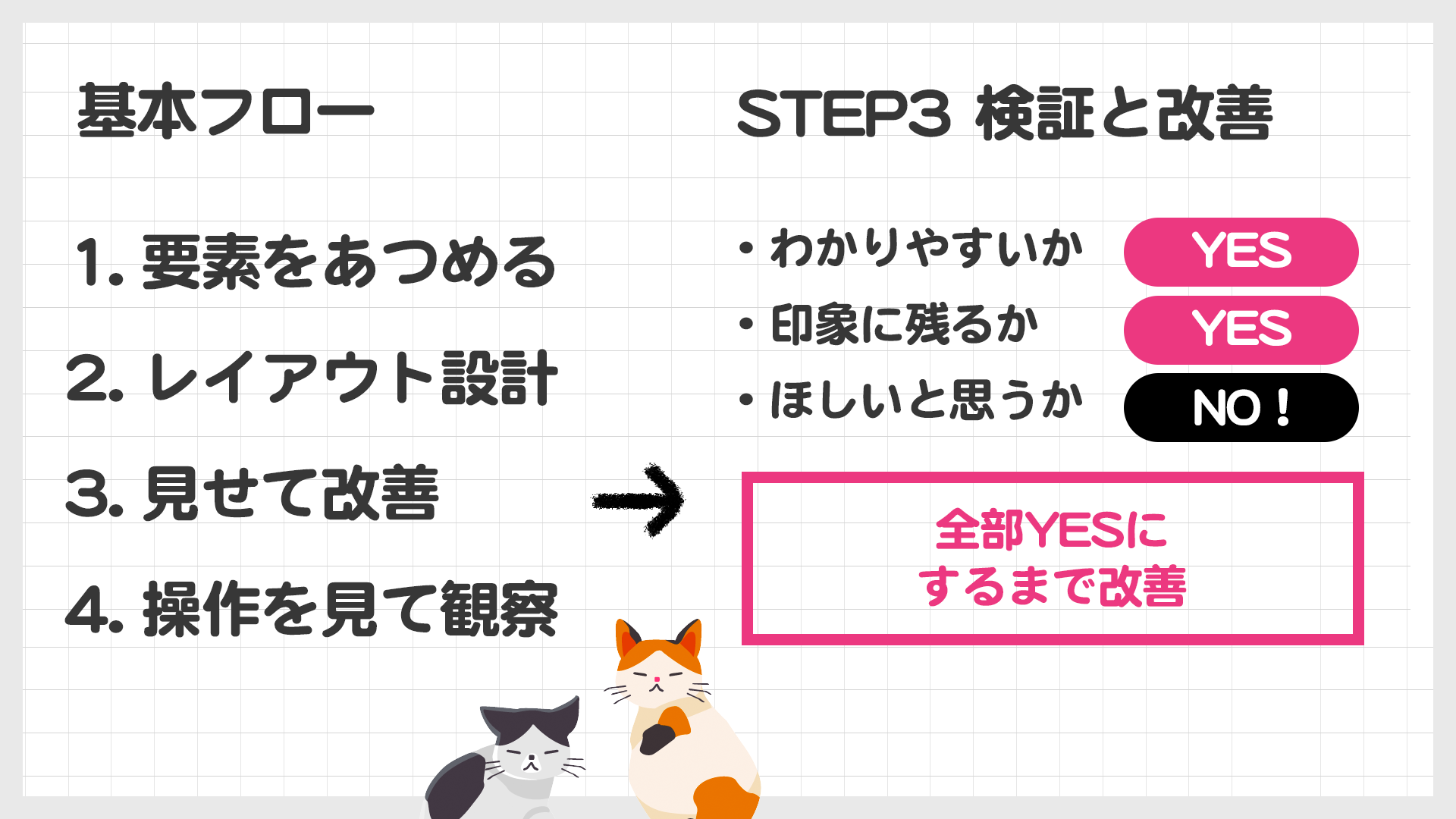
And once the landing page is complete, show it to people and get their feedback. Show it to people who are as close as possible to 'real users'. For each landing page, show it to at least 5 people, one by one, and get their feedback. For the feedback you receive, simply ask the following three questions:
- Is it easy to understand?
- Is it memorable?
- Do you want it?
These are direct questions, but if you receive positive feedback for these three, you can sell your products or services with a very high probability. Adding other landing page-specific questions like 'Does it seem trustworthy?' or 'Does it feel stylish?' will further increase certainty.
If you get a negative answer, ask why they think so and make continuous improvements. The point to note is to "show it in order" rather than showing it to multiple people at once. This means showing it to the first person -> improving -> showing it to the second person -> improving, and so on, so that you can clearly grasp the improvements with each showing. Avoid showing it to multiple people at once, as it makes it difficult to clearly grasp the improvements.
Observe the operation by watching next to them.
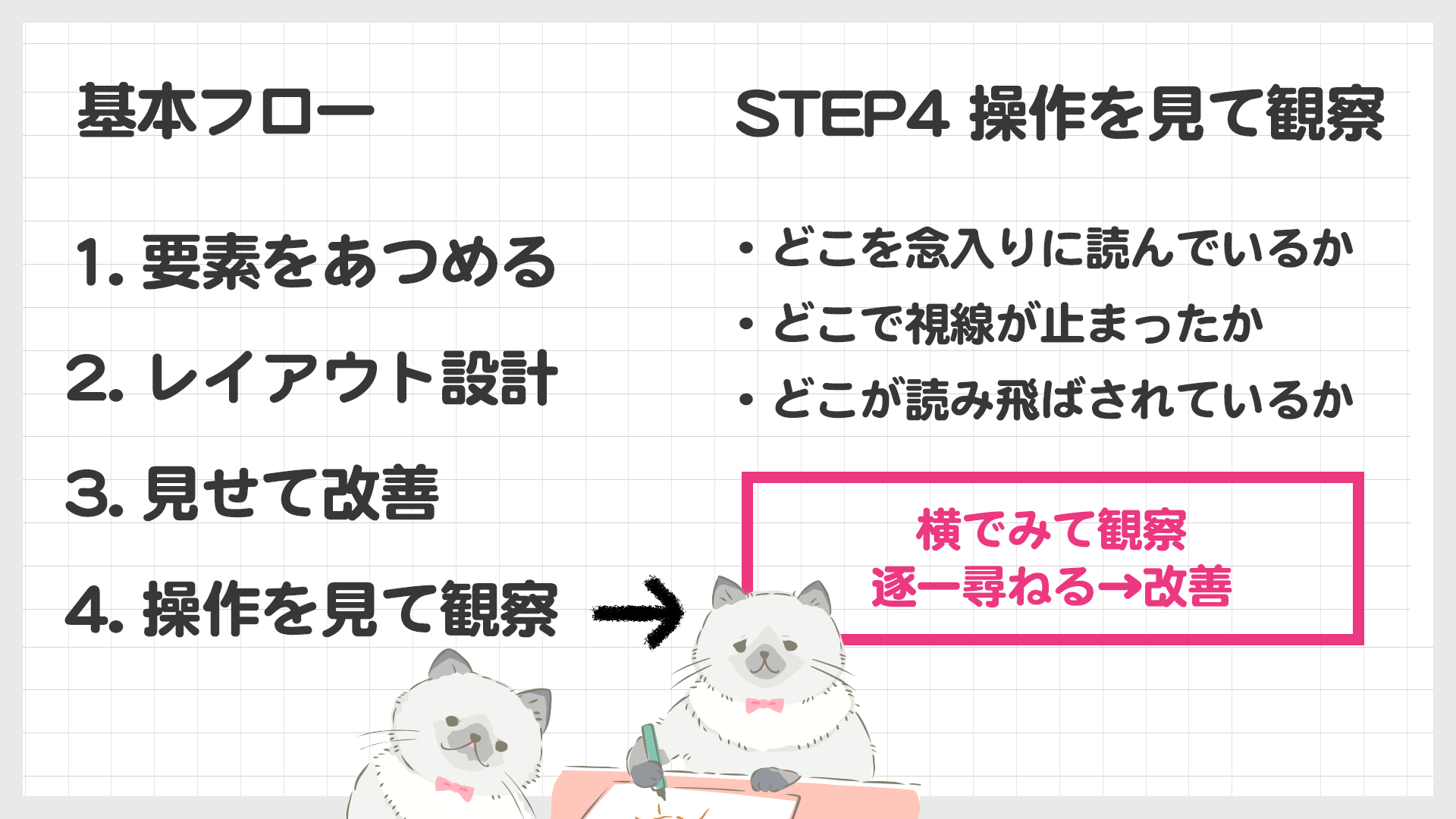
And when showing the landing page, it's important to have them operate it next to you as much as possible. While the test user is viewing the landing page, observe their screen and cursor movements. Keep the following three points in mind as areas to observe carefully.
- Where are they reading carefully?
- Where did their cursor and gaze stop?
- What parts are they skipping over?
Points where they read carefully or where the cursor stops indicate either confusion or interest. Ask them directly; if it's unclear, improve it, and if they're interested, provide more detailed information. Conversely, parts that are skipped over are likely considered unnecessary content. Shortening the landing page by omitting these parts might lead to more purchases. If anything catches your attention, ask them freely and get their feedback.
By observing user behavior in this way, it becomes clear what needs to be improved. You can gather much more direct and accurate information than by analyzing with heatmap tools (which visualize where users move their cursors with varying color intensity). By co-creating landing pages with test users in this manner, it's possible to create pages with high conversion rates.
Have you generally grasped the overall flow? You can create high-performing landing pages more intuitively and directly than with access analysis tools or various marketing frameworks.
Next, let's explain the elements that make up a landing page.
About each element.
As mentioned at the beginning, the majority of a landing page's results are determined by its content elements. That's why a detailed understanding of the intent and content of each element is crucial for success. We will explain each one, so please use this when gathering elements.
Catchphrase
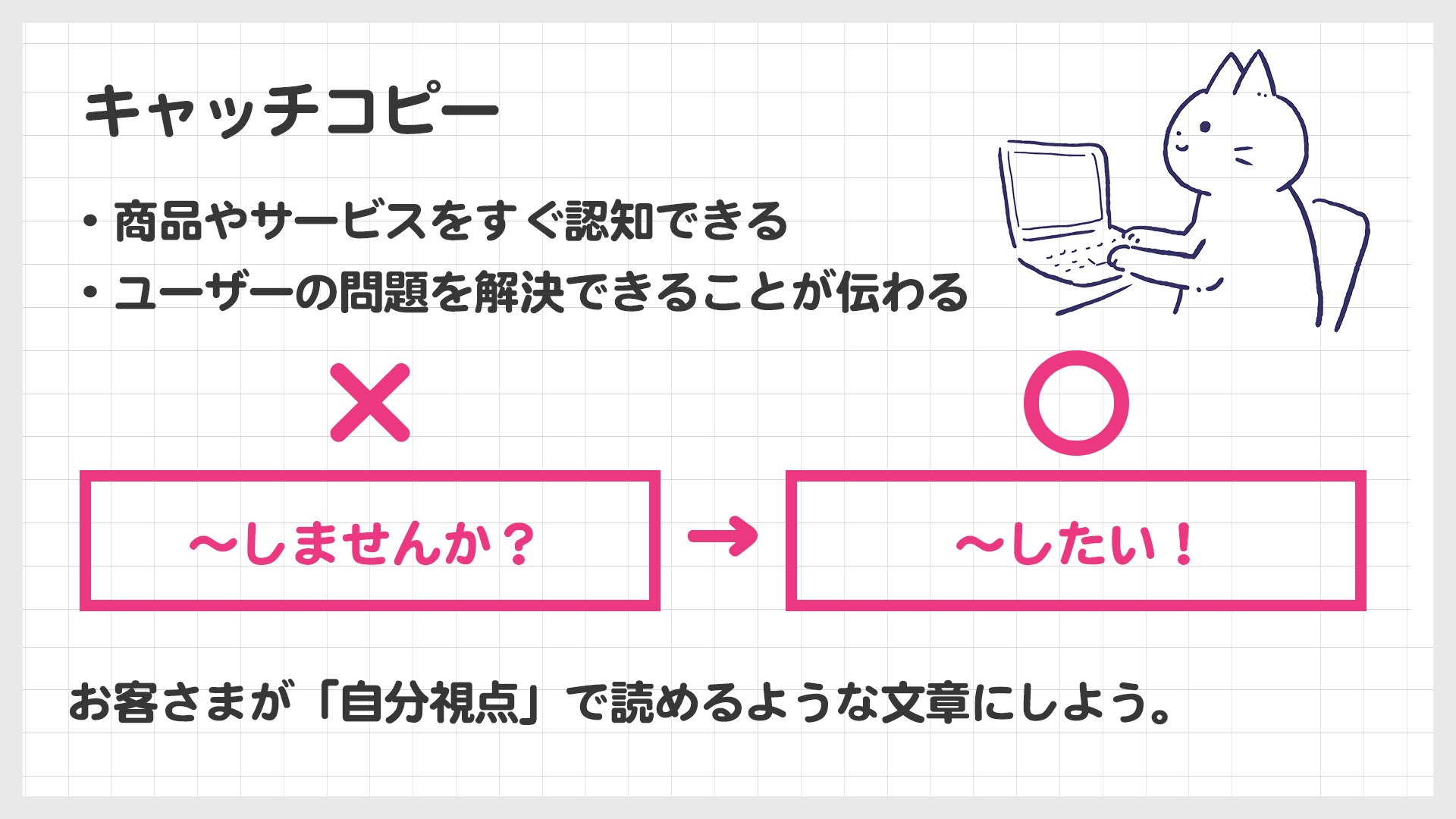
What's important is to be able to express the product or service introduced on the landing page in a single phrase. There are two main axes when creating a catchphrase: consider either something that "allows immediate recognition of the product or service" or something that "conveys that it can solve the user's problem" as the basic idea.
Also, instead of an inviting tone from us, like "Why don't you…?", a user-centric tone and phrasing, like "I want to…!", would be better. This is because it makes it easier for users to perceive it as their own matter.
Writing in a tone that speaks to the user as if it's their own matter applies not only to catchphrases but also, fundamentally, to headings on a landing page. Don't overthink it; just focus on these three simple points when creating them.
Current problems faced.
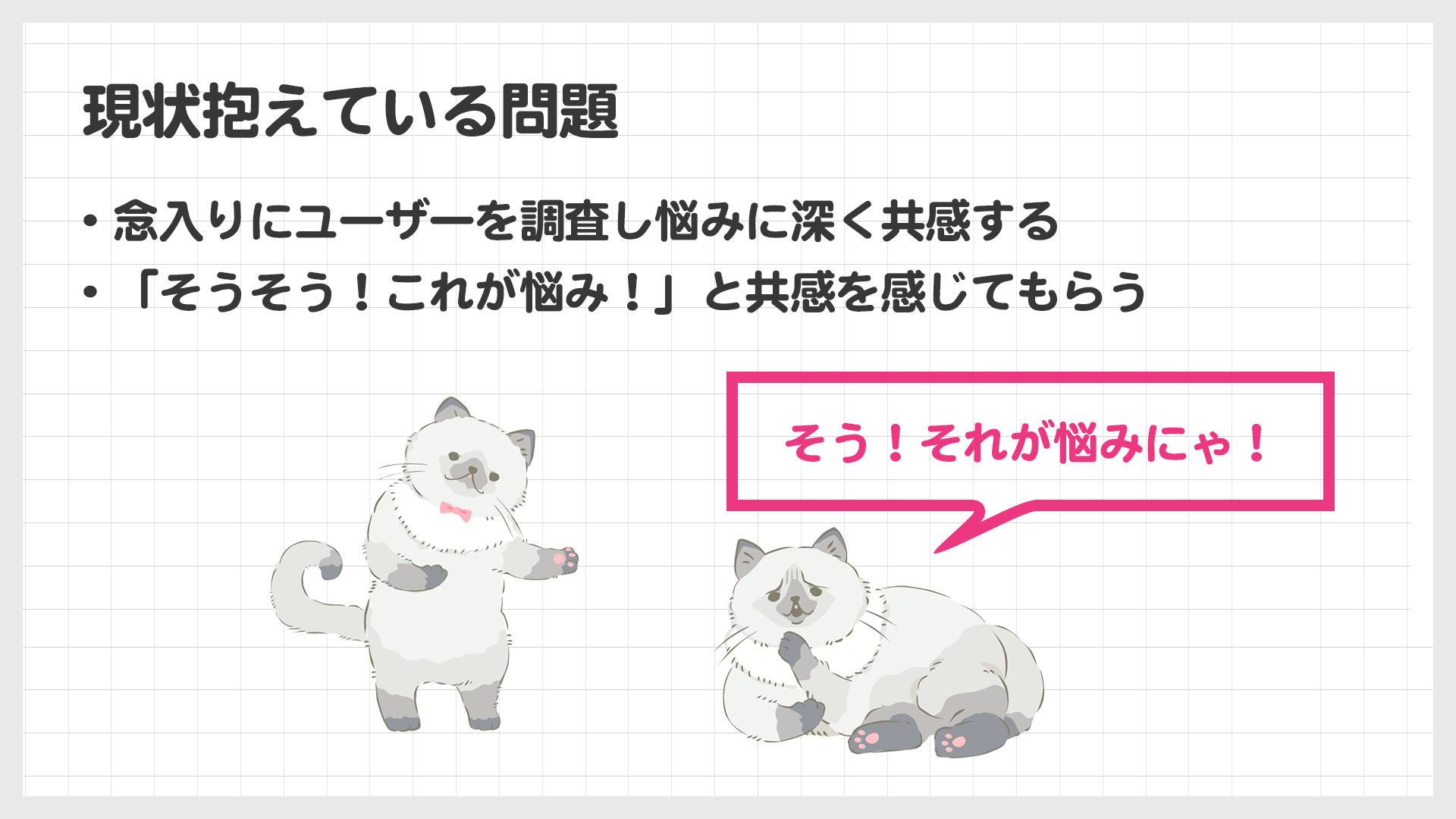
Let's speak on behalf of the user's current worries and problems they want to solve. In this section, you need to deeply empathize with the user. You need to make users feel, "Oh, yes! This is exactly my problem!", so thoroughly research users and uncover their concerns.
If this empathy doesn't work, they won't continue reading, so research and discuss problems that the majority of people are certainly struggling with.
Future Vision
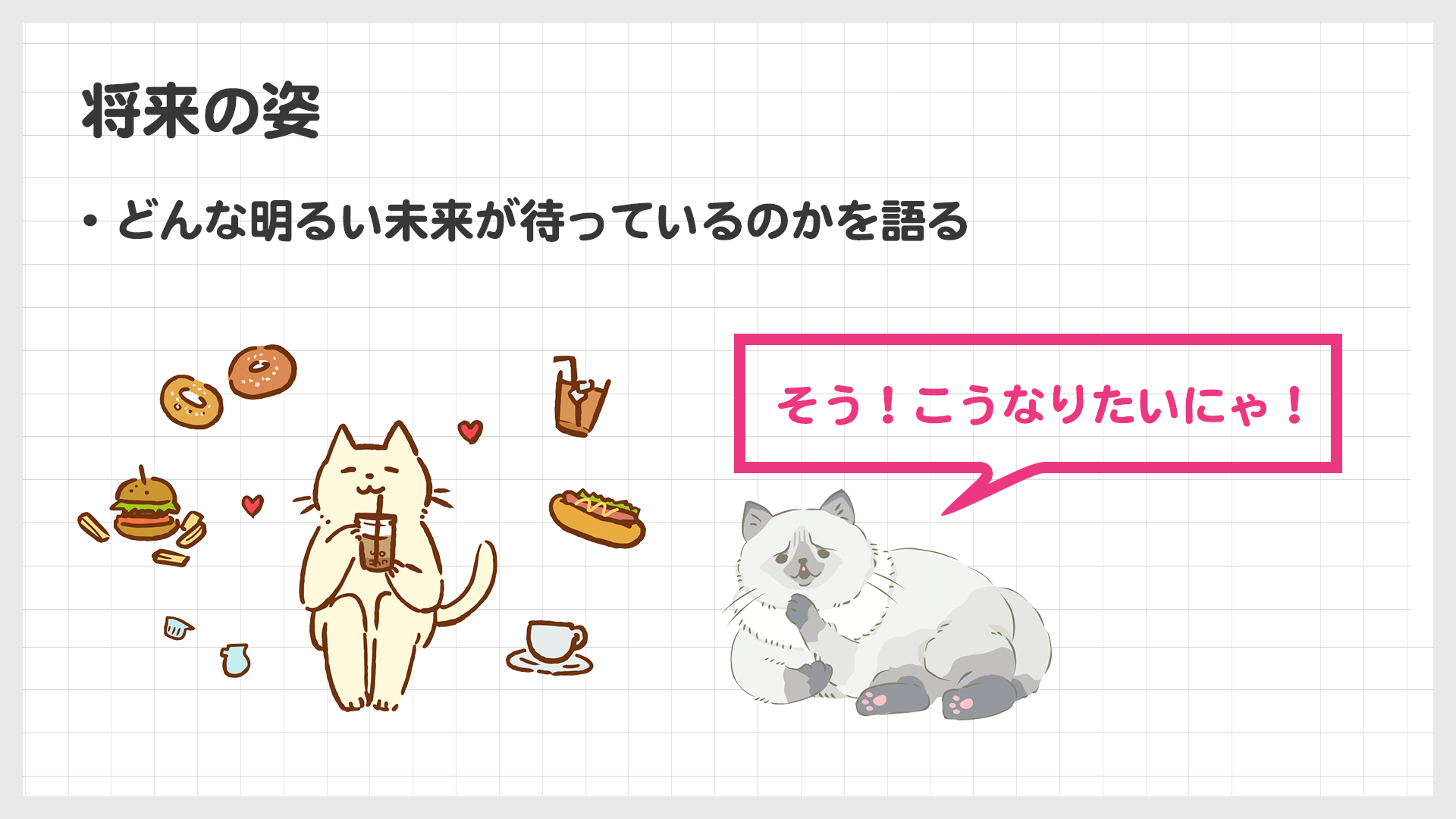
Talk about the bright future that awaits if they solve their problems using this product or service. The important thing is to make them feel, "I want to be like this!"
By evoking aspirations like "I wish I could be like this," or "I want to be like this," you draw out their desires. What you sell on a landing page is not the product or service itself. What you sell is the future where users solve their problems and become their ideal selves.
Expertise
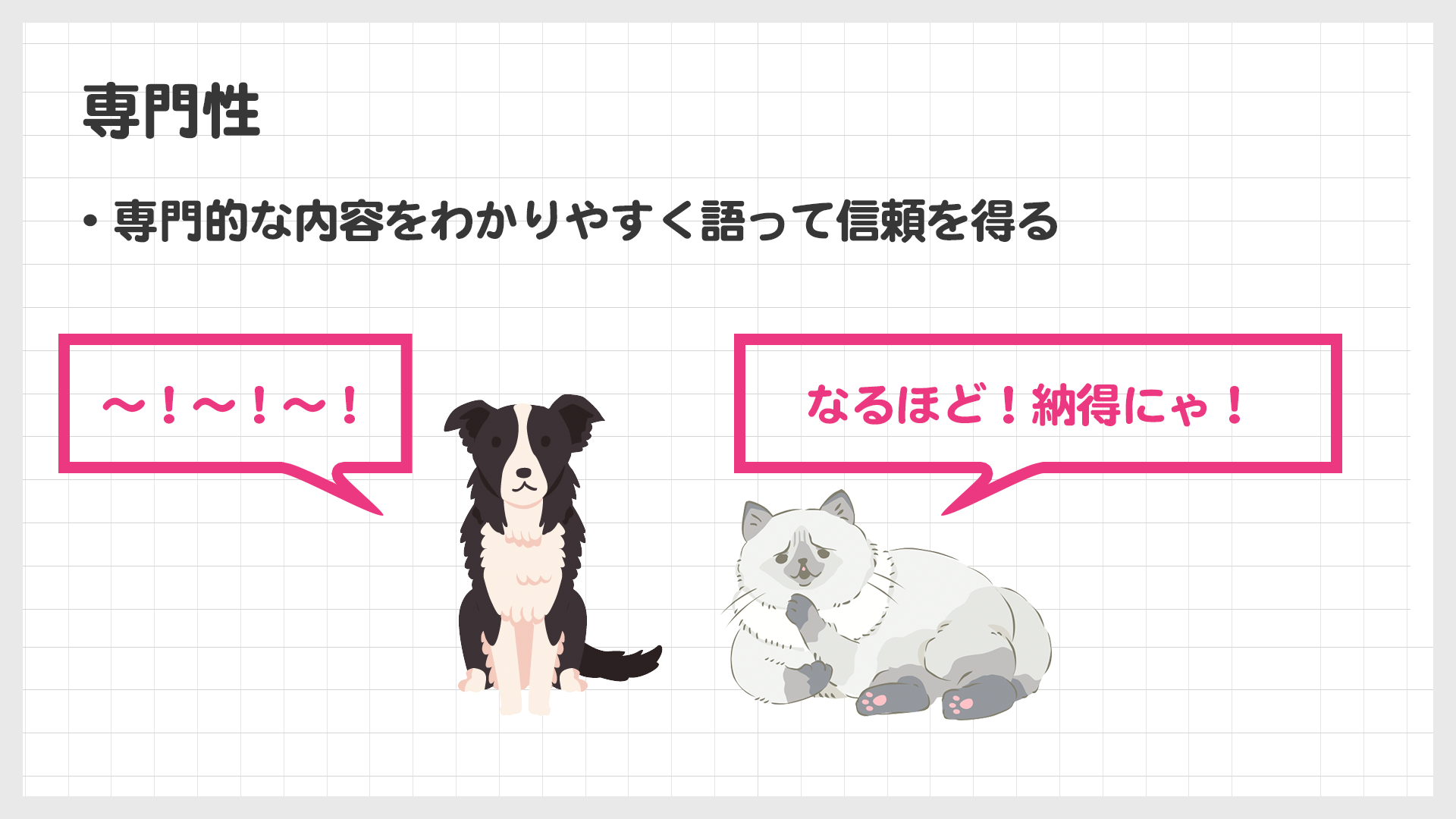
Up to this point, we have made the problem personal, shown a future vision, and drawn out aspirations. However, without concrete measures to make those aspirations a reality and the expertise to back them up, no one will want your products or services. Therefore, we will explain and substantiate the specialized content in an easy-to-understand manner.
Even if you explain specialized content in a specialized way, users won't understand it. It's important to convince them with specialized content as simply as possible, so even elementary school students can understand. What matters is that it gets across.
Achievements
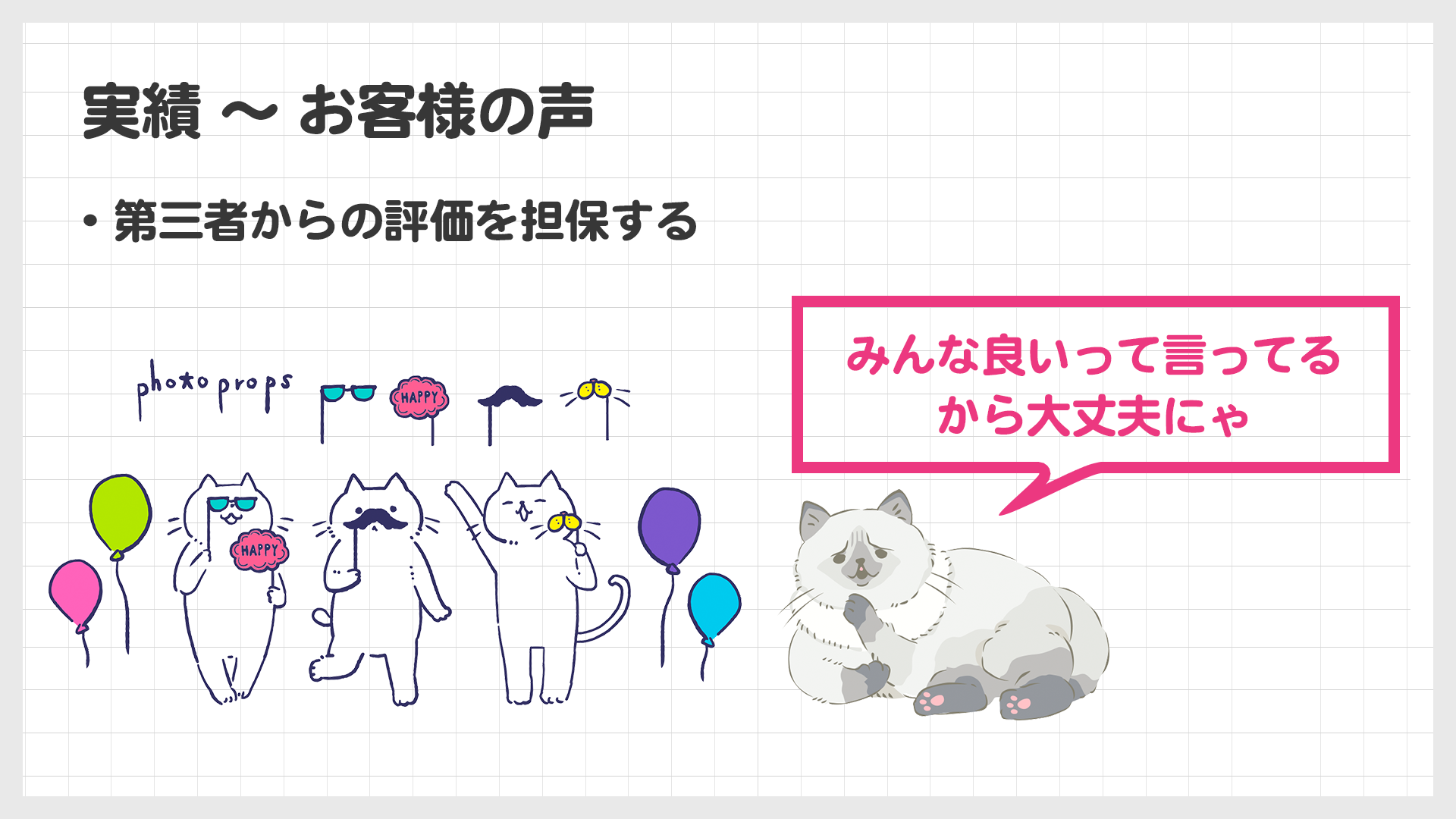
Let's introduce what kind of achievements you've made so far. If you've just started and don't have any achievements yet, it's important to first offer your services or products for free as a test to build up a track record.
However, if it's a product sale like supplements, for example, it might be difficult to talk about achievements. If you have been featured in media or have achievements in terms of sales volume, please include them. If you don't have any specific achievements, you can integrate them with customer testimonials. Please be flexible.
Customer Testimonials
No matter how specialized the service, evaluation from a third party is necessary. Customer testimonials serve to guarantee third-party evaluation and reassure users, making them think, 'Oh, other people are saying it's good, so it must be okay.'
Ideally, you'd want to collect many at first, but if you don't have any, just like with achievements, offer your products or services for free and get feedback from customers. Having customer testimonials adds third-party evaluation, which can build trust in the product's appeal and expertise.
Message
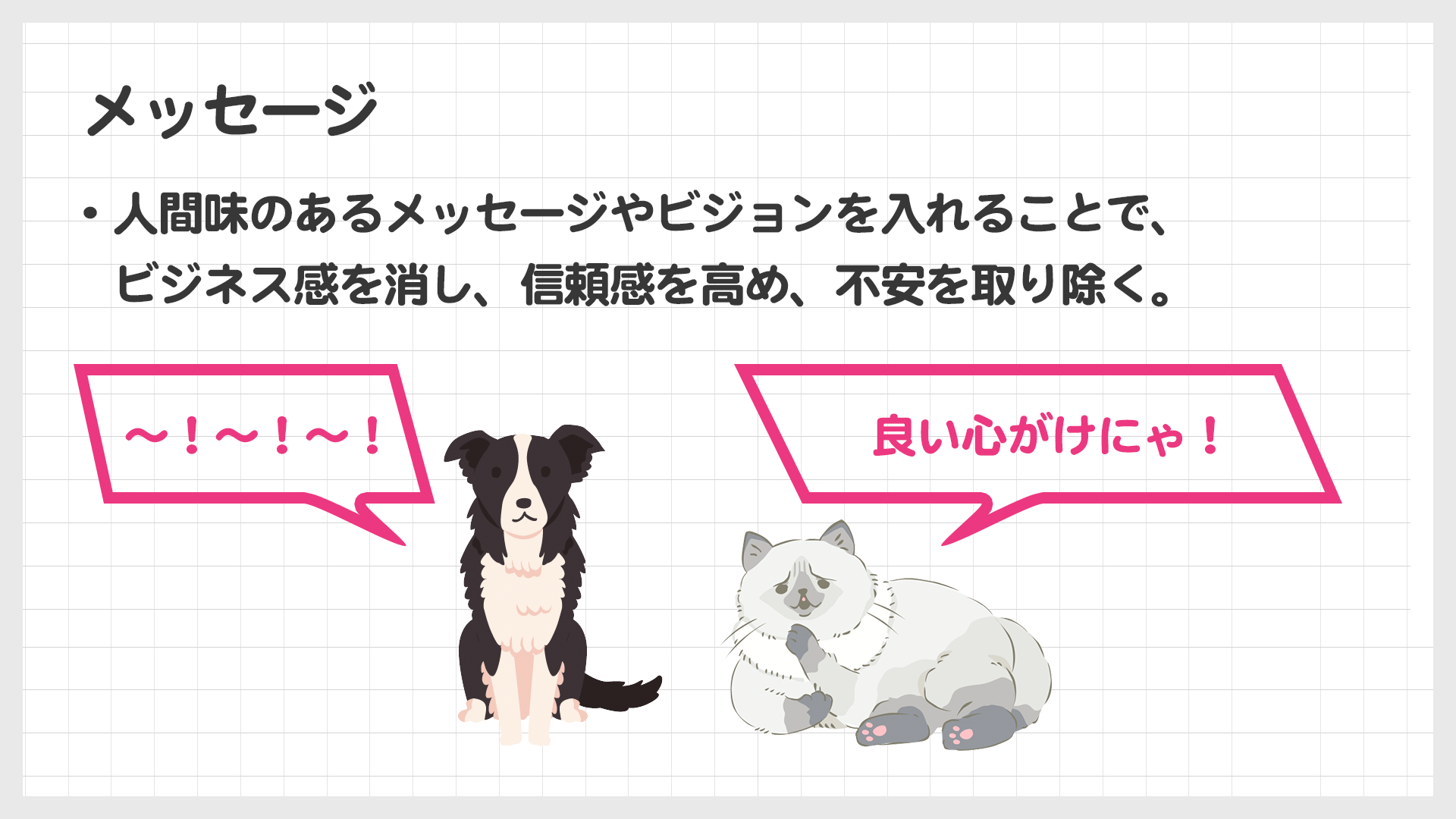
Up to this point, we have focused on promoting products and services. As a result, it might feel a bit too business-like.
For example, if you're talking to a salesperson and the meeting ends with only business and product talk, you might understand the product or service, but still hesitate a step further, unable to make a final decision. Many people might even find it suspicious.
Therefore, by including a human touch message or vision at the end, you can eliminate the business-like feel, enhance trust, and remove anxiety about the final decision.
Offer
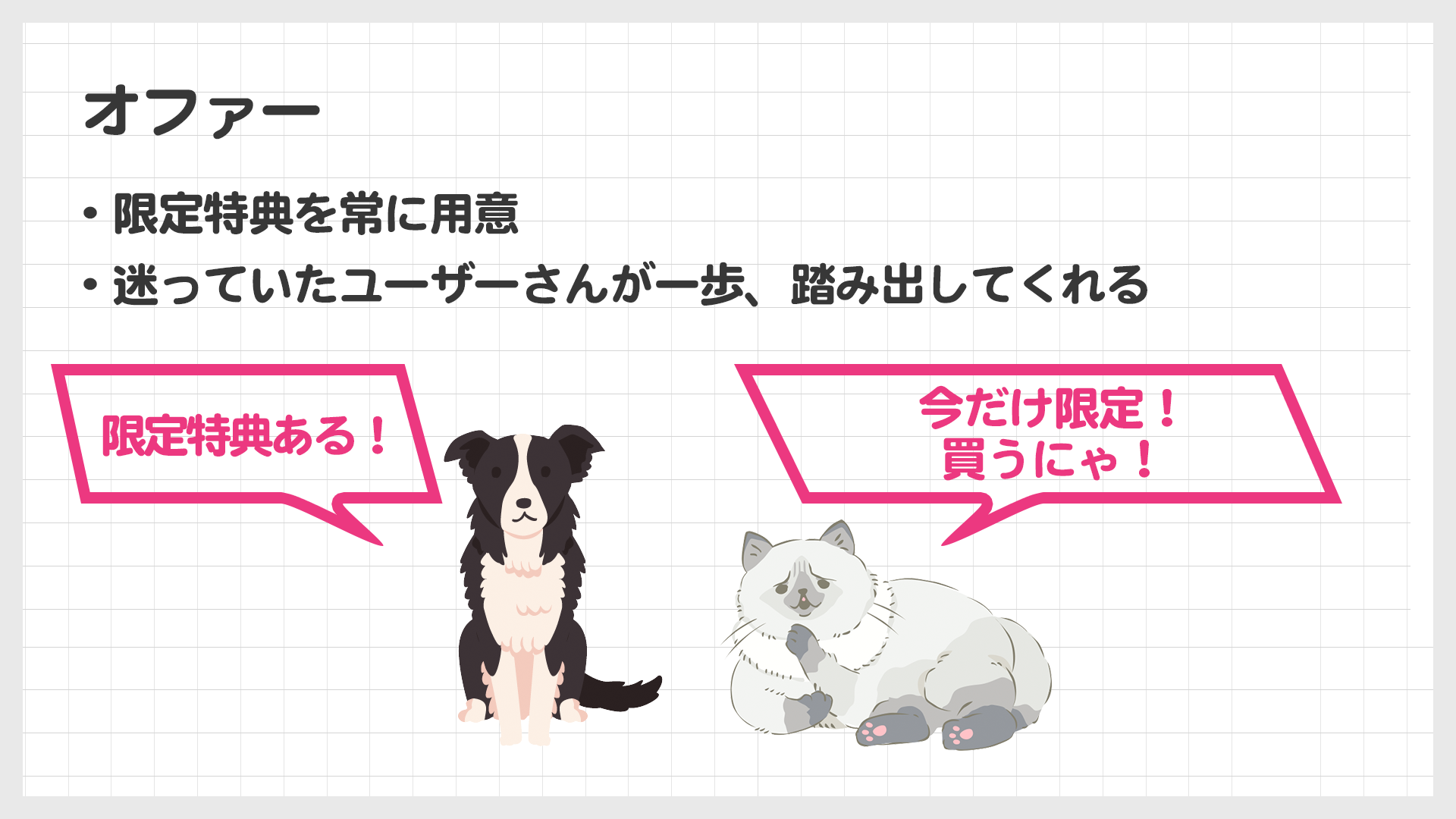
Finally, we recommend making a purchase. While simply placing a purchase link might lead to sales when the time is right, let's consider one more step to encourage users.
What's effective here is a 'limited-time bonus.' By always having a limited-time bonus like 'you'll get this as a purchase bonus if you buy now,' users who were hesitant about purchasing will take that extra step.
It's often said that Japanese people are particularly weak to 'limited-time offers!' but it's normal for anyone to think they should get something if it's free. Especially if it's a valuable 'extra,' the effect is even higher, so prepare bonuses that everyone would want.
Guarantee
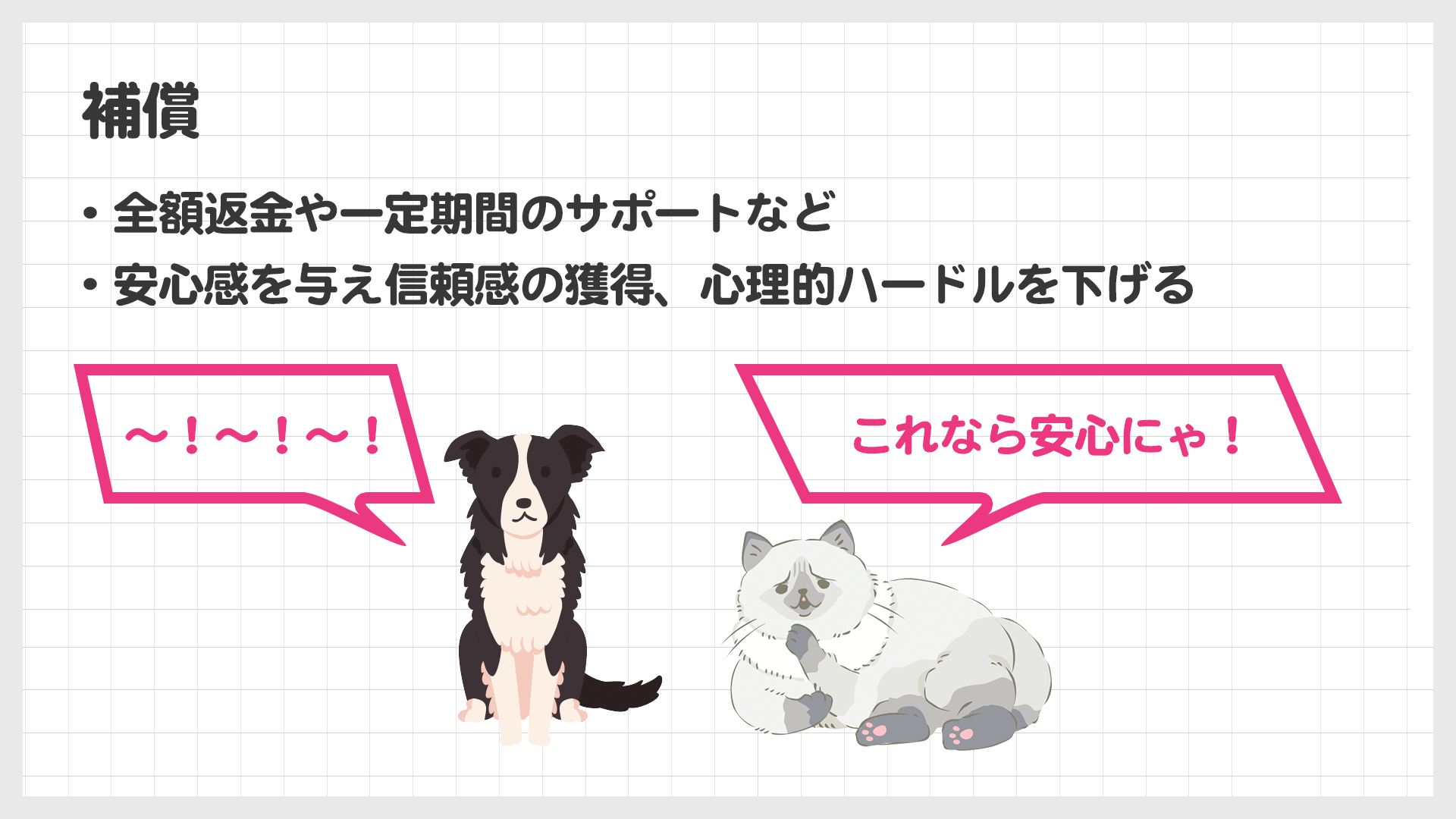
You might often see messages like 'Full refund if you don't like it!' Even if you offer a full refund for dissatisfaction, only a portion of people will actually request it, which is why it's done.
However, refunds require courage, so even if it's not a refund, providing some form of guarantee will allow users to purchase with peace of mind. Offering support for a certain period also has the effect of reassuring them.
Frequently Asked Questions
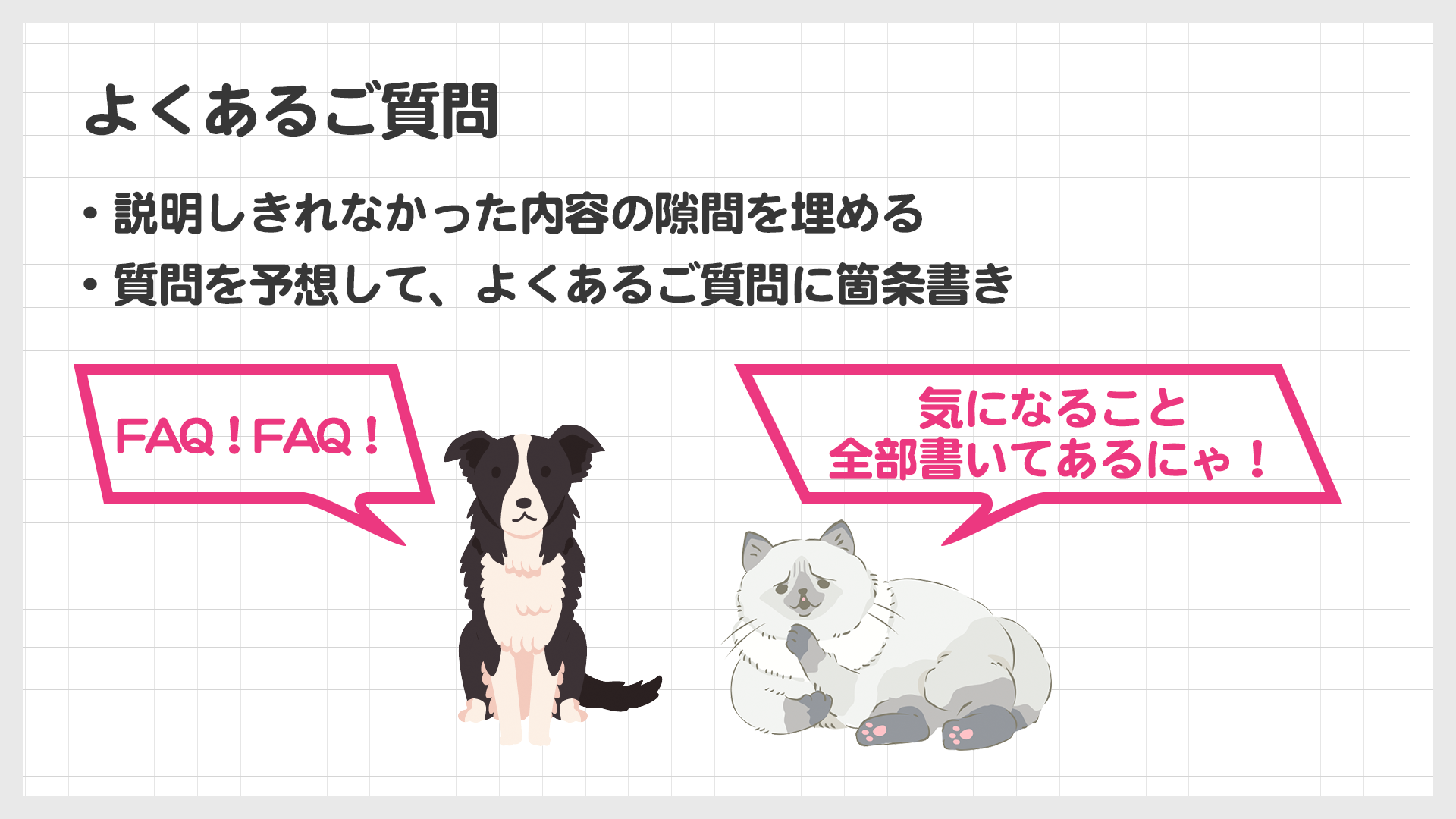
Up to now, we have provided a lot of information on the landing page, but we haven't been able to explain all the detailed content. In particular, users are likely to have several questions as they read through the landing page.
By anticipating those questions and listing them in an FAQ section, you can resolve users' concerns. FAQs play an important role in filling the gaps of content that couldn't be fully explained.
Summary
We have explained the components and creation methods of a successful landing page, but as mentioned at the beginning, you should not expect to create a page that yields results on the first try. Consider it lucky if you get results on the first try, and establish a system for operation, analysis, and improvement.
If outsourcing, partner with an external vendor who can analyze, operate, and improve, or if hiring, employ a creator who can not only build but also analyze and improve. In any case, creating a landing page that generates long-term sales requires marketing knowledge. If the operational system is neglected, the landing page you worked hard to create will likely be wasted in most cases.
Instead of a system where 'only a few people can do it,' it's most important to create a mechanism where acquired know-how, knowledge, and insights are shared within the team, allowing anyone to easily create a high-converting landing page if they choose to.
For example, in sales, it's common for a few excellent individuals to generate the majority of overall sales, but such a person-dependent system becomes unstable. A landing page is essentially a web-based sales tool and an entry point for generating revenue, so let's build a team that relies on systems rather than individuals.
WRITTEN BY
クオン編集部
私たちは事業デザインとマーケティング、高品質な技術をご提供するWEB制作会社です。これまで大企業から中小企業まで数々のプロジェクトを支援させて頂きました。14年積み重ねた中で培われた知識、知見、技術を多角的にご提供。また、人材の育成を通して自走できる体制づくりまでサポート。事業視点の技術×質×戦略でビジネスを支援します。