What if your event grows? Key points for a team managing an event of around 100 people.
7 MIN READ
Even if you start small, events will gradually expand.
As the community expands, what you need to consider is that the same methods as before will gradually become unmanageable.
Especially when events involve 100 or more people, it becomes impossible to pay attention to every part of the venue, and there are limits to the number of people you can directly assist yourself.
At this point, the organizer's job needs to shift its focus to 'team building'.
It becomes necessary to attract attendees, plan, and manage on-site operations by involving people, increasing staff, and managing events systematically.
When building an organization to run events, there are four key points to be aware of.
Instead of simply inviting friends and organizing them, you need to create an organization that will properly inherit and operate according to your ideals.
Let's invite people who can dedicate time to the event.
First, when it comes to holding an event, I think many people participate in their spare time rather than as their main job.
However, even if it's not their main job, if you don't work with people who are highly motivated and seriously committed to the event, the event itself will likely not succeed.
In reality, no matter how many talented people you have, nothing will succeed with only occasional participation.
Even if someone has no particular achievements or is inexperienced, a person who takes the initiative to act, saying 'I want to do this' or 'I want to do that,' is far more useful than a talented person who only participates occasionally.
Experienced and knowledgeable popular individuals are best suited for giving occasional advice. They are not positions to be active as team members.
What you need are members who can dedicate time and seriously engage with the event and its planning. And it's important to know each other well.
For event expansion, focus on creating a fun, bright, and exciting team.
I have participated in many events and seen various others. Among them, it's undeniable that the better the event, the more enjoyable the team seemed.
Certainly, sometimes there are arguments and clashes. But it's most important to be able to move on to the next project with excitement and fun, without holding grudges.
It's fun to play together regularly. It's also fun to have serious discussions about various things. Creating such an atmosphere is important.
Events are fundamentally enjoyable. That's not just for the attendees.
Staff, organizers, and the entire team feel motivated to do it again because they enjoy what they are working on there.
Because it's fun, because it's exciting, they seriously plan and want to do something with everyone, even a little, and so they start to participate themselves.
This might be true not only for events but for all team building. In any case, an exciting team. A team where everyone can laugh and have fun.
Even so, let's aim to build a team where serious discussion and moving forward can be enjoyable.
Clarify roles within the team and share information efficiently with tools.
Once a fun and exciting team is formed, first clarify the roles. You might even decide on positions and assign cool names.
And what's needed is quick information sharing. Many people will be operating in their spare time between their main jobs, so they can't spend too much time on communication.
Therefore, let's make full use of communication tools like Chatwork and Slack, and strive for quick and smooth information transmission.
Do you know? Chatwork and Slack.
Many people probably use Facebook Messenger and LINE, but tracing past information becomes very troublesome with Facebook Messenger and LINE.
In that regard, Chatwork and Slack allow for quick information sharing and smooth reference to past information. If you don't know how to use them, please give them a try.
To achieve role division and smooth communication, and to better advance the team's passing, let's utilize more user-friendly and efficient tools.
Let's divide profits clearly. Give it a purpose other than income.
Honestly, events with around 100 people won't generate significant profit.
It's a simple math problem. For example, if you gather 100 people and receive 5000 yen from each.
Even then, it's only about 500,000 yen, and to rent a venue for 100 people and provide 5000 yen worth of value, a suitable venue and content are necessary.
In that case, at most about 200,000 yen will remain, and if you end up monopolizing that 200,000 yen yourself, complaints from members will grow.
People who talk about making money from event management usually only consider scenarios where staff work for free. Naturally, if only the organizer is profiting, no one will follow.
Therefore, considering the team size, audience scale, costs, and overall, an event won't be very profitable unless you aim to gather at least 1000 people and treat it as a main business.
So, organizers think about getting sponsors and raising funds, but that requires creating an attractive venue and attracting a large audience, which is a lot of effort.
Instead of trying to earn money from events, it's more effective and less risky for events to exist as a catalyst to boost another main business.
In this case, let's consider the event as a promotion and share the profits among everyone. If sharing the profits can boost motivation even a little, that will be of greater value.
Normally, there aren't many opportunities to directly reach over 100 people in an analog way. It would be better to proceed by considering it a place to regularly disseminate the brand.
Summary
It has been said that team building is important for business, and an event is the most typical example of where the team becomes important.
If the team creating the event is not thoroughly enjoying the occasion and cannot move forward with excitement, a good event cannot be created.
Above all, an event is about everyone sharing a fun and exciting space.
If the organizer is not excited, a fun atmosphere cannot be created.
Not just the customers, but because the team is excited, people who want to enjoy themselves in the same way gather, and the feeling spreads, creating the atmosphere.
Good customers will not approach a gloomy, dark, and quarrelsome team.
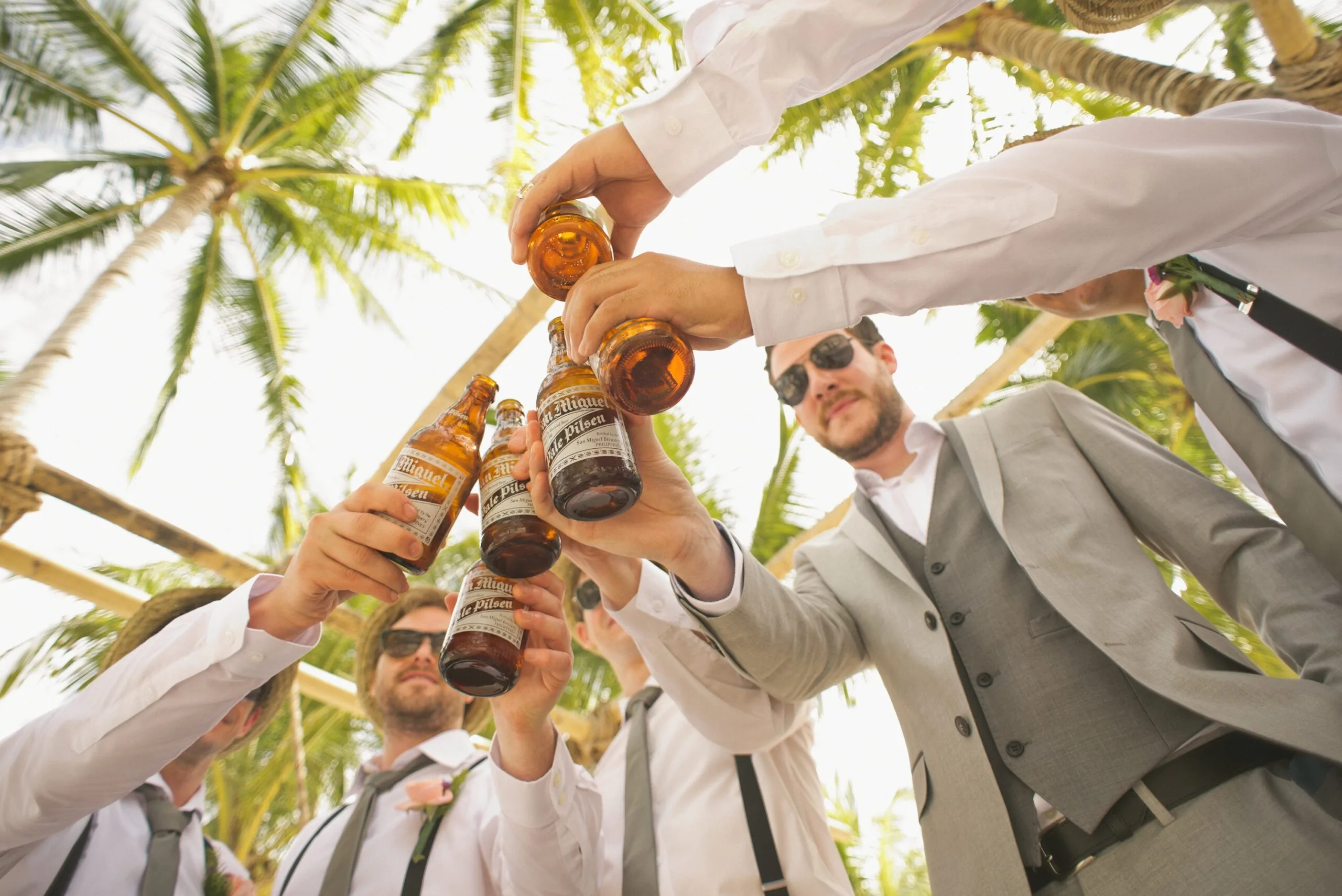
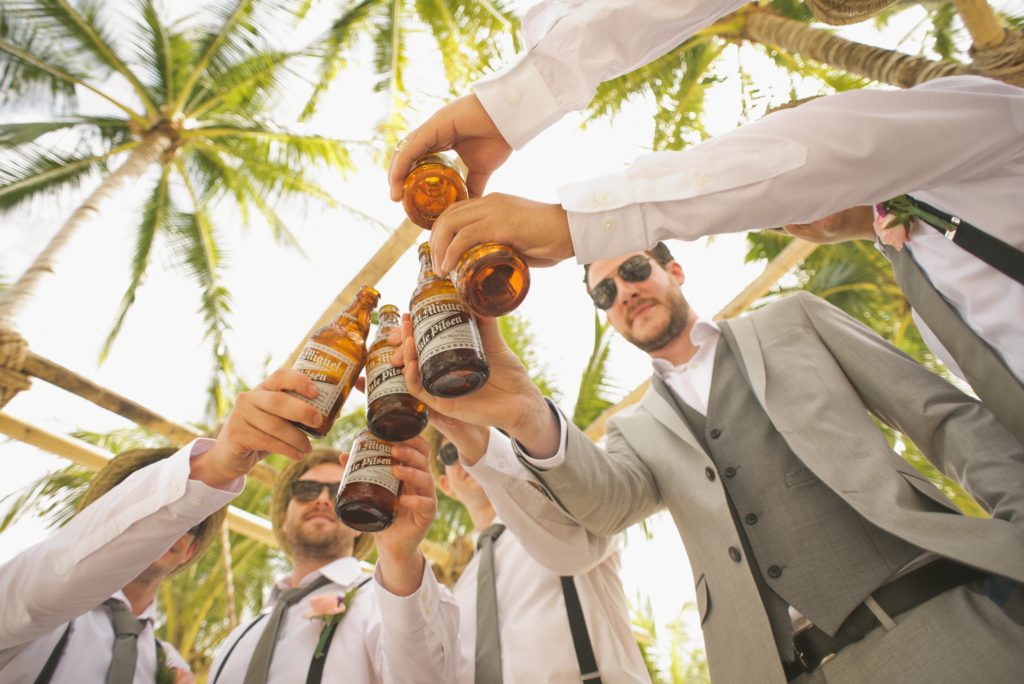
If you are going to hold an event of around 100 people or more, first, let's create a fun team. Let's build a team where everyone can enjoy drinking together.
That will be the first step to creating a good event.
WRITTEN BY
上山 翔太
2007年からWEBデザイナー / エンジニアとして活動を開始。2015年には、セブ島にて立ち上げた日本人対象のクリエイター育成スクールと運営していたメディアを売却。その後、アメリカで事業デザインを無理やり学ぶ。帰国後は起業家育成プログラムを立ち上げ、新規事業開発、起業家育成に従事するほか、マーケティング戦略策定、ウェブ開発技術を提供。「IT留学シェアハウス」や「起業教育・支援プラットフォーム」を開発、運営。その後、株式会社QUONを立ち上げ。WEB制作事業を軸として、クリエイターと起業家を産む村づくりプロジェクトなどをバリ島と日本を中心に推進。


