Don’t overdo it. As a result of denying challenges, Japan fell behind.

5 MIN READ
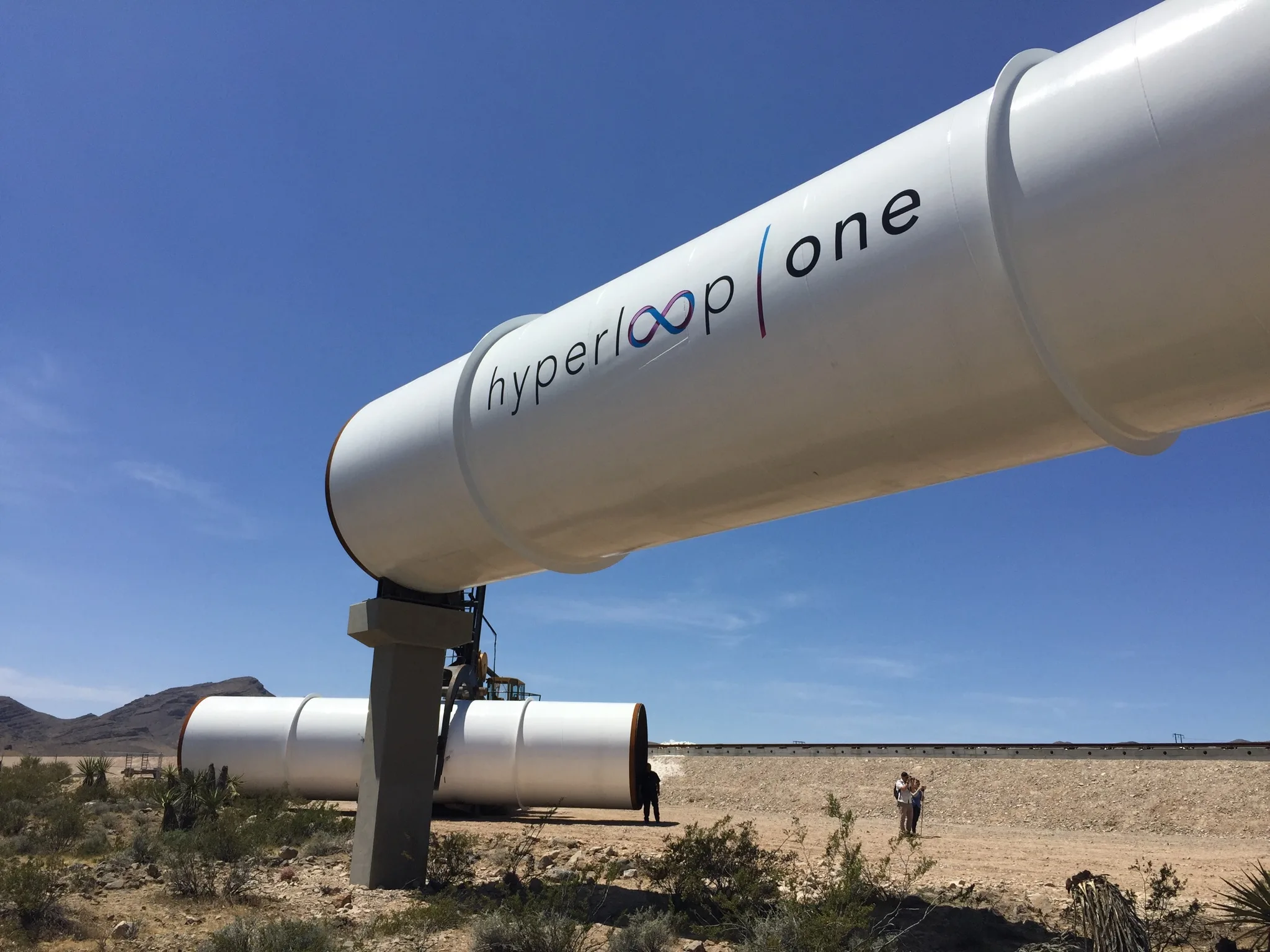
The other day, in a Facebook share, a high-speed travel technology called Hyperloop, proposed by a famous entrepreneur named Elon Musk, was introduced.
It's like a super-fast Shinkansen that reaches speeds of up to 1200 kilometers per hour.
It might be easier to understand if you think of it as a capsule moving at super high speed inside a long, thin tube.
If it becomes a reality, high-speed travel will become possible, overturning the conventional wisdom of travel time.
What's more, it's an environmentally friendly system that uses very little energy.
There's no doubt it's a vehicle that will bring great evolution to conventional means of transportation.
That's why engineers, entrepreneurs, and researchers worldwide are all eagerly anticipating it and continuing their research.
However, what I want to talk about this time is not the potential of Hyperloop itself, but something more fundamental.
It was the other day when I found an introduction to Hyperloop on Facebook.
I was looking at the information with excitement, thinking, 'Oh, research has progressed quite a bit, and it seems like it will be put into practical use soon.'
After that, I casually looked at the comment section.
I felt very uneasy about the words written in the comment section.
Because most of the words written there were negative.
'It's dangerous! It's useless! It's impossible! Don't use taxpayer money! Travel by train is still the best!' I don't know what they were fighting against, but they were criticizing it with considerable force.
Everyone, I want you to listen to this.
No matter what anyone says, as long as research is being conducted on a global scale, Hyperloop will become a reality in the near future.
Up until now, in the evolution of the world, things that were once thought impossible have been realized within a few decades.
And from now on, even more technologies and possibilities that were thought impossible will be realized.
Nevertheless, if you say, 'It's dangerous! It's useless! It's impossible! Don't use taxpayer money! Travel by train is still the best!' and do nothing, what will happen?
They will only think about it after Hyperloop becomes a reality.
Oh no, the world's transportation systems have evolved thanks to the Hyperloop.
Our technology and knowledge will become outdated. We should have gotten involved sooner.
Oh no, oh no.
By then, it was already too late; those who had been researching for years would monopolize the initial market.
In fact, such cases have happened in the past.
It was when smartphones began to spread.
At that time, in Japan, there was a tendency to mock them, saying, 'Who would use a smartphone?', 'It won't sell anyway,' 'Japanese technology is the best,' and 'An iPhone is just like a toy.'
However.
As it turned out, smartphones quickly spread worldwide, and Japanese products were pushed aside.
Even if we tried to follow later, it was already too late.
In a similar vein, regarding the IT sector, we have fallen behind, and that's where we are now.
Large corporations have all collapsed one after another.
They are being pushed aside by products from around the world, and their market share is being taken away.
Toshiba, Sharp, Panasonic subsidiaries, and NEC—large corporations that would have been described as stable just a few years ago—are successively falling into crisis.
Even when trying to create products from new ideas, ideas are hard to come by.
And so, here we are today.
Starting with Hyperloop, everything that is being researched worldwide will eventually come true.
Even Hyperloop, its mechanism itself is still under research, and at this stage, there are many disadvantages and advantages.
However, as long as research continues in this world, it will eventually be realized.
At this stage, negative thoughts like 'It's impossible,' 'It's dangerous,' or 'It can't be done' are meaningless.
Impossible things will become possible, and dangerous things will become safe through research.
And eventually, they will enter the market and overturn existing concepts.
At that time, people who denied it as 'impossible' will start saying 'wow'.
We are entering an era where 'impossible' or 'unfeasible' are no longer concepts to be considered.
How many things that were once considered dreams have actually become reality.
What's important is 'how to make the impossible possible'; only that has value.
If you only deny the impossible as impossible, it's only natural that when it's realized, everything will be taken by others.
Since everything is moving towards realization, saying 'it's impossible' is like deliberately declaring 'I will fall behind'.
Towards new endeavors, words like 'it's impossible' or 'it's dangerous' are like deliberately giving up a chance to win.
Even if we do nothing, the world will evolve on its own and take over the market on its own.
If we do nothing, it's natural that all existing things will shrink.
In such an era, uttering words like 'it's impossible' is no different from suicide.
How can we bring what was 'impossible' closer to 'realization'?
How can we make even impossible things possible?
Now more than ever, we should believe in the more unknown and reach out for it.
WRITTEN BY
上山 翔太
2007年からWEBデザイナー / エンジニアとして活動を開始。2015年には、セブ島にて立ち上げた日本人対象のクリエイター育成スクールと運営していたメディアを売却。その後、アメリカで事業デザインを無理やり学ぶ。帰国後は起業家育成プログラムを立ち上げ、新規事業開発、起業家育成に従事するほか、マーケティング戦略策定、ウェブ開発技術を提供。「IT留学シェアハウス」や「起業教育・支援プラットフォーム」を開発、運営。その後、株式会社QUONを立ち上げ。WEB制作事業を軸として、クリエイターと起業家を産む村づくりプロジェクトなどをバリ島と日本を中心に推進。


